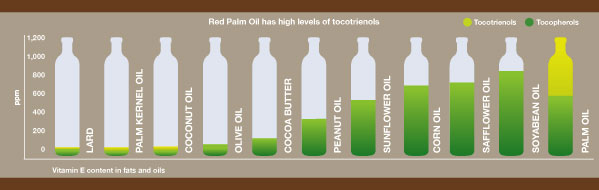
It is virtually impossible to get enough Vitamin E without supplementation. Vitamin E exists only in small amounts in modern diets, primarily because many tend to shy away from foods rich in vitamin E due to high fat content (e.g., oils, seeds, nuts). Vitamin E is a family of nutrients that occurs naturally in eight different forms. It includes four tocopherols (alpha, beta, gamma, delta) and four tocotrienols (alpha, beta, gamma, delta).
The vitamin E supplements that you buy at the pharmacy is called alpha-tocopherol. They provide only one small part of the full E complex and are difficult for the body to absorb and use. Unless your brand contains the full spectrum of these nutrients, you are only getting marginal nutritional benefits of vitamin E (1).
Palm fruit oil and rice bran are the only complete source of all four tocotrienols. These valuable nutrients, together as a complex, provide much greater health benefits than the isolated substance. A University of California, Berkeley study found tocotrienols to be 40 to 60 times more |
|
effective(2) than tocopherols in their antioxidant capabilities. The double bonds in the isoprenoid side chain allow tocotrienols to move freely and more efficiently within cell membranes than tocopherols, giving tocotrienols greater ability to catch and fight free radicals.
These wonder nutrients are the missing link in vitamin E complex, and have been suggested to have a significant impact on preventing heart disease(3), build antioxidant reserves in skin, and other common conditions through their antioxidant and anti-inflammatory effects. Tocotrienols appear to have powerful anti-cancer effects, as well. Studies have shown that tocotrienols present in palm oil inhibit the growth of cancer cells in vivo(4,5) as well as in vitro(6,7.).
“Unfortunately many people do not understand the benefits that palm tocotrienols can offer. Therefore, often they have an inadequate amount of this powerful antioxidant in their diet. I encourage everyone to consider adding red palm oil to their diet.”
Dr. Paul Sylvester
Professor of Pharmacology
University of Louisiana |