What is Palm Oil?
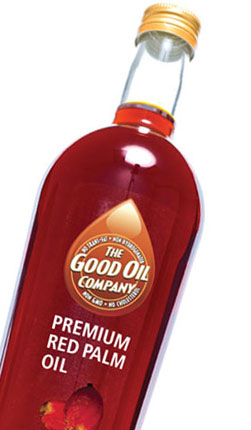
Palm Oil is a form of edible plant oil obtained from the fruit of the Oil Palm tree (Elaeis guineensis). It is the second-most widely produced edible oil after soybean oil. Palm Oil itself is reddish and contains a high amount of carotenoids. It is used as a cooking oil, to make margarine and is a component of many processed foods.
What Is palm olein, palm stearin and super palm olein?
Palm oil is semi-solid at room temperature (20°C). The liquid portion could be physically separated from the solid portion of palm oil by fractionation. After fractionation the liquid portion is called "palm olein", which is commonly bottled and sold as cooking oils. The solid fat portion is called "palm stearin" and it is commonly used to formulate trans-free fats such as margarine, shortening and vegetable ghee. Sometimes the palm olein is further fractionated to a more liquid fraction called "super palm olein". This oil fraction could withstand colder temperature than palm olein before they cloud or solidify.
Why is Palm Oil popular as a cooking oil?
Palm Olein is the liquid fraction obtained by fractionation of Palm Oil and is widely used as frying oil and due to its good resistance to oxidation and formation of breakdown products at frying temperatures and longer shelf life of finished products. It is also high in tocotrienols, (Tocotrienols are members of the Vitamin E family. Among vegetable oils, Palm Oil is the richest natural source of Tocotrienols. Tocotrienols are surprisingly not found in any other vegetable oils like soy bean oil, canola oil, rape seed oil and sunflower oil. Tocotrienols can be found naturally but in much lesser quantities in rice barn, barley, wheat gem and oats.)
A misperception from the past?
There's a good chance you've heard palm oil erroneously referred to and grouped together with palm kernel oil and coconut oil as a "tropical oil," a contributor to high cholesterol levels, or even as a trans-fat. Palm fruit oil is different and contains much less saturated fat than coconut and palm kernel oil.
Palm oil has been commonly thought to be an unhealthy oil full of saturated fat, a form of fat that promotes heart disease. This is largely because palm oil is often confused with another oil called palm kernel oil. This oil comes from the kernel of the Elaeis guineensis palm instead of the flesh and requires solvents to be added for processing. Palm oil and palm kernel oil have very different fatty acid compositions. The palm kernel oil is certainly unhealthy because it contains a whopping 88% saturated fat, but palm oil contains only between 40-50%, about as much as butter.
Once consumed, how well is palm oil digested?
Once consumed, palm oil does not remain intact in the digestive tract for long, for it's soon attacked by the digestive enzyme pancreatic lipase, breaking down the fat molecules into smaller fragments called "fatty acids and mono-glycerides". These digestive products are then absorbed.
Refined palm oil and its processed fractions, palm olein and palm stearin, are in fact 95-97% digestible, which falls within the digestibility range of 93-99% for most edible oils and fats.
|
|
What is the shelf –life of Processed Palm Oil products?
When stored in unbroken packaging provided that the storage conditions specified are observed, the shelf-life of palm oil and its products are 24 months from the date of production. Air, heat, light, and age affect the quality and the shelf life of the oil, which deteriorate through oxidation (rancidity). The oxidation process is greatly enhanced when edible oils are stored in containers that are not air tight and in areas where the oil is exposed to heat and light. If improperly stored, some oils can easily take on other flavors.
Why does palm olein sometimes turn "cloudy" or "solid"? Is the oil still safe for consumption?
When the ambient temperature drops below the "cloud point" of palm olein (approximately 20°C) as happens during a cold night or weather, palm olein molecules crystalise out of solution and the oil appears cloudy. At lower temperatures, the cloudy oil then becomes solid. This is only a physical transformation and the oil is perfectly safe for consumption. The oil soon clears up when the ambient temperature rises above the "cloud point". This is similar to the water-ice phenomenon.
To lower the cloud point and prevent "clouding", palm olein can be blended with any polyunsaturated vegetable oil so that this cooking oil blend would appear clear in countries with cold weather.
Palm Oil Uses
Palm fruit oil is consumed worldwide in more than 100 countries. In some parts of the world, palm fruit oil is often still consumed in its unrefined state, as an ingredient of traditional dishes, where it contributes its characteristic golden red color and unique flavor. However, to most users, palm oil is more familiar as a refined vegetable oil product purchased at their local store and incorporated into their everyday foods.
You may be surprised to learn that many of the foods you eat are made with palm oil. Baked goods. Instant noodles. Baby formula. Cake mixes. Breakfast bars. Potato chips. Crackers and other snacks. And restaurant foods such as French fries. Palm oil is abundant, and is increasingly recognized as having a role to play in a healthy balanced diet.
Of the oils and fats on the market, palm fruit oil serves well many of might best meet today's consumers criteria. It is healthful, abundantly available, relatively inexpensive, and technically suitable for most food products. Perhaps this is why palm oil has become the largest internationally traded vegetable oil in the world proving its acceptance in the global market. |